Breathing Exercises for Kids: 6 Fun Techniques They'll Actually Do
Why "Take a Deep Breath" Never Works
You've said it. I've said it. Every parent on the planet has said it at least once: "Just take a deep breath."
And every child on the planet has ignored it.
Here's the thing — deep breathing genuinely works. The science is solid. Slow exhales activate the vagus nerve, which tells the brain to calm down. It's one of the fastest ways to shift from fight-or-flight to "I'm okay." Even for a 4-year-old.
The problem isn't the breathing. It's the delivery. Telling an upset preschooler to "breathe" is like telling a cat to sit. Technically possible, but you need a better strategy.
These six breathing exercises for kids work because they're disguised as play. Your child doesn't know they're doing calm-down breathing. They think they're pretending to be a snake or blowing out birthday candles. And that's exactly the point.
Before You Start: Two Ground Rules
Practice when they're calm. The worst time to teach a new breathing technique is during a meltdown. That's like teaching someone to swim while they're drowning. Practice these during calm moments — after bath, before bed, randomly on a Tuesday afternoon. Then, when big feelings hit, the technique is already familiar.
Do it with them. Every single time. Kids learn by watching, not by being told. If you sit on the couch saying "breathe like a bunny," nothing happens. If you get on the floor and breathe like a bunny WITH them, magic happens.
1. Birthday Cake Breathing (Ages 2-6)
Hold up one hand with all five fingers spread wide. Those are your birthday candles.
Take a big breath in, then blow out one candle at a time — one slow breath per finger. Fold each finger down as you "blow it out." Five slow exhales.
Why it works: The finger-folding gives kids something to watch and count, which anchors their attention. And five slow exhales is enough to genuinely shift their nervous system.
Level it up: Let your child pick how old they're turning. "I'm turning 8!" Great — hold up eight fingers and take eight breaths. More candles = more calm-down time. Sneaky, right?
2. Snake Breathing (Ages 3-7)
Breathe in slowly through the nose. Then breathe out through the mouth with a long, slow hisssssss — like a snake.
The hiss should last as long as they can make it. Challenge them: "Can you hiss longer than me?" Turn it into a competition. The longest hiss wins.
Why it works: The extended exhale is the secret weapon of calm-down breathing for children. When your exhale is longer than your inhale, your heart rate physically drops. The hissing sound also gives kids auditory feedback — they can hear themselves calming down.
Bonus: this one works great in the car. No props needed, and the hissing sound is oddly satisfying for backseat meltdowns.
3. Belly Buddy Breathing (Ages 2-5)
Have your child lie down on their back. Place a small stuffed animal on their belly.
Tell them: "Give your buddy a gentle ride. Breathe in and lift him up. Breathe out and bring him back down. Nice and slow — don't let him fall off!"
Why it works: This teaches diaphragmatic breathing (belly breathing) without any technical explanations. The stuffed animal makes it concrete and visual. Your 3-year-old doesn't know they're engaging their diaphragm. They just know their teddy bear is going up and down, and that's fun.
This is the single best deep breathing activity for preschoolers who struggle with "breathe into your belly" as a concept. The stuffed animal does all the explaining for you.
4. Flower and Candle (Ages 3-6)
Hold up one hand as a flower, the other as a candle.
Smell the flower — slow breath in through the nose. Blow out the candle — slow breath out through the mouth.
Repeat five times. Simple. Effective. Done.
Why it works: The two-hand visual gives kids something to focus on, and the imagery is easy for even a 3-year-old to grasp. Many preschool teachers use this one daily because it takes 30 seconds and works every time.
Variation: Let your child pick different things to smell and blow. "Smell the pizza! Blow out the candle!" "Smell the roses! Blow the dandelion!" This keeps it fresh when they've done it a hundred times.
5. Square Breathing (Ages 5-7)
This one's better for slightly older kids who can follow a multi-step pattern.
Draw a square in the air with your finger (or trace one on paper):
- Side 1 (going up): Breathe in for 4 counts
- Side 2 (going right): Hold for 4 counts
- Side 3 (going down): Breathe out for 4 counts
- Side 4 (going left): Hold for 4 counts
Trace the square three times. By the third round, most kids are noticeably calmer.
Why it works: The counting and tracing occupy the thinking brain, which pulls attention away from the emotional brain. It's the same technique used by Navy SEALs and first responders (which, if you mention that to a 6-year-old, suddenly makes breathing exercises very cool).
6. Dragon Breathing (Ages 3-7)
Breathe in through the nose. Then breathe out hard through the mouth — hands up like claws — with a big "HAAAAAAH!" Like a dragon blowing fire.
Do three big dragon breaths, then one slow, gentle breath. "The dragon is resting now."
Why it works: Sometimes kids need to let energy OUT before they can calm down. Dragon breathing gives them permission to be loud and forceful — which meets them where they are — and then transitions to calm. It's the breathing version of "stomp it out, then settle."
This one is especially great for angry kids. When your 4-year-old is seeing red, "breathe like a dragon" is a lot more appealing than "calm down."
Making Breathing Part of Your Routine
The real trick with calm-down breathing for children isn't teaching the technique. It's making it automatic. You want your child to reach for a breathing exercise the way they reach for a blankie — without thinking about it.
Here's how:
- Build it into transitions. Three belly breaths before dinner. Snake breathing in the car on the way to school. Birthday candle breathing before bed. Attach it to something that already happens daily.
- Put it on paper. Print or draw the techniques so your child can see them. Stick them on the fridge, in their calm-down corner, or inside their backpack. A visual cue helps them remember what to do when their brain is too overwhelmed to think. (The activity book When I Feel Angry has illustrated breathing exercises built right into the pages — so kids can practice and color at the same time.)
- Celebrate the effort, not the result. "You tried dragon breathing when you were mad. That was awesome." Even if it didn't fully calm them down, the fact that they tried is enormous. That's a neural pathway being built.
- Let them choose. "Do you want to do snake breathing or birthday cake breathing right now?" Giving them the choice puts them in control — and control is calming all on its own.
When Breathing Isn't Enough
Let's be real: sometimes no breathing exercise on the planet is going to stop a full-blown meltdown. And that's okay. Breathing works best as a prevention tool and a cool-down tool — not an emergency brake.
If your child is too far gone for breathing, go physical first. Stomp, jump, squeeze a pillow. Let the body burn off the stress hormones. Then, once the intensity drops from a 10 to a 6, try breathing.
Over time, as your child practices these techniques in calm moments, they'll start reaching for them in heated moments too. Not every time. Not perfectly. But it'll happen. And the first time your 5-year-old takes a deep breath on their own before reacting? You'll want to throw a parade.
Start with one technique this week. Just one. Practice it at bedtime when everyone's relaxed. Make it silly. Make it fun. That's all it takes to plant the seed.
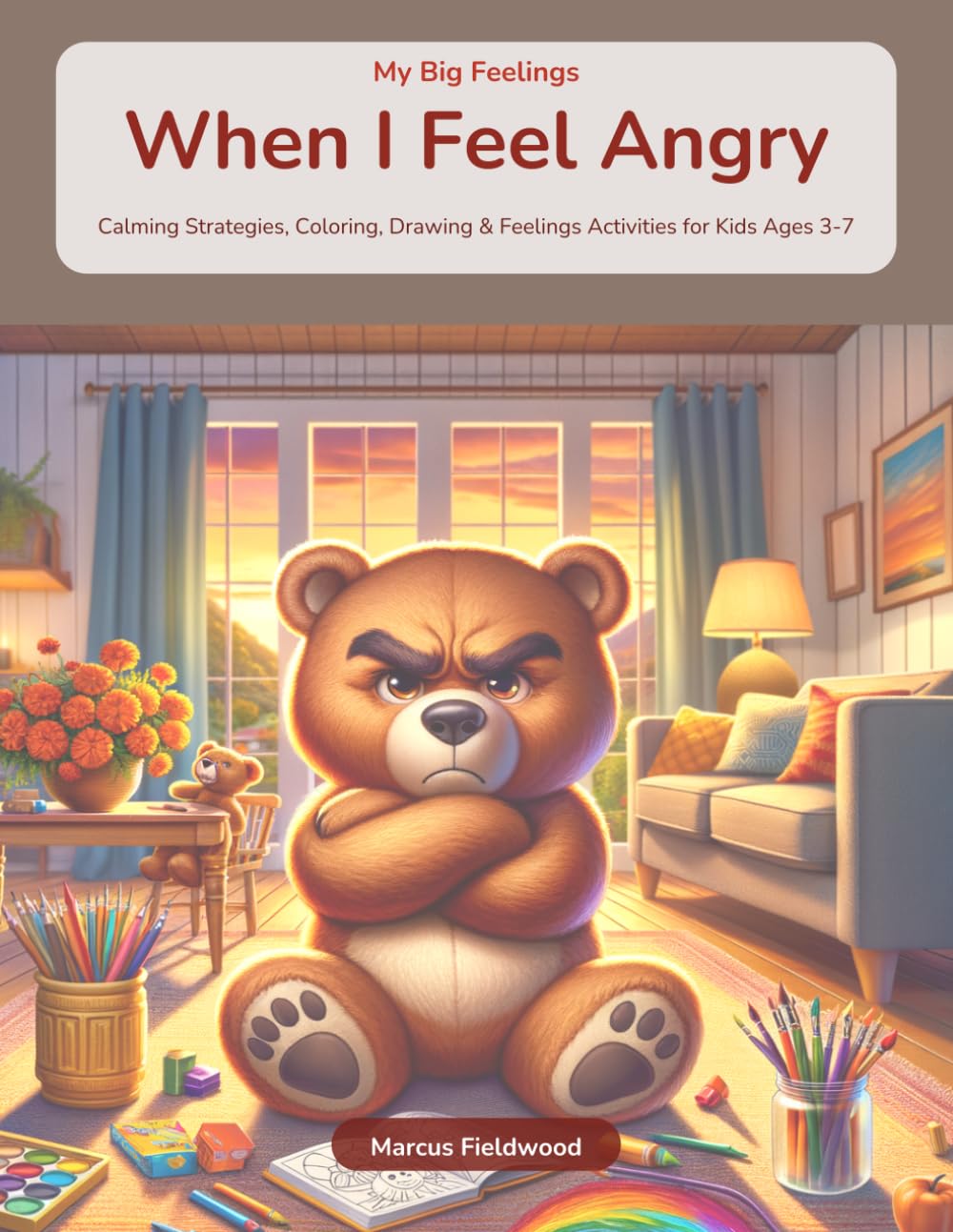
📚 When I Feel Angry
Anger Management Activity Book for Kids Ages 3-7. 80 pages of hands-on activities.
Buy on Amazon for $14.99